Introduction to Literature • Corrigan • Fall 2010 • ENGL 2133 06

tree image

Tuesday, May 3, 2011

Final Grades

I'm letting you know that I've posted the grades for the final exam and the final grades for the course on Blackboard.

Have a wonderful, productive, restful summer!

Blessings,
Professor Corrigan

Wednesday, April 27, 2011

Final Exam Study Guide

The final exam may cover anything that we've read or discussed so far in this semester with particular emphasis on everything since the midterm. A few items (those marked with * below) from before the midterm will definitely be on the exam, probably with several questions from each. The format of the exam will be similar to the format of the midterm, though longer.

Literary Texts
  • Wendy Cope, "The Orange"
  • Tom Griffin, The Boys Next Door
  • Robert Hass, "State of the Planet"
  • Mary Oliver, selected poems
  • Gabriel Garcias Marquez, "A Very Old Man with Enormous Wings"
  • Ursula Le Guin, "The Ones Who Walk Away from Omelas"
  • Flannery O'Connor, "A Temple of the Holy Ghost"
  • Elizabeth Bishop, "In the Waiting Room"
  • C. S. Lewis, The Voyage of the Dawn Treader
Texts, Concepts, and Practices for Reading Literature (*indicates items from before midterm)
  • *Corrigan, "Literature Is a Thing You Do as Part of Life"
  • *Sacred Reading / Lectio Divina (Handout)
  • *Notes on Art, Meaning, Theme, and Interpretation (Handout)
  • Steven M. Fettke, "The Spirit of God Hovered Over the Waters: Creation, the local Church, and the Mentally and Physically Challenged, A Call to Spirit-led Ministry"
  • Field trip to AFI
  • Field trip to Circle B
  • Interpretation (Special Post #2)
  • Paul T. Corrigan, "Poetry as a Spiritual Practice for Mary Oliver"
  • Paul T. Corrigan, "Notes on Nature and Poetry as Spiritual Practices" (Handout)
  • Tom Beaudoin, "Bodies and Branding" (Handout on sweatshop workers)
  • Facts and Figures on Florida Farmworkers (Handout)
  • Note on Prayer, Note on the Spiritual Journey, and Note on Walking in the Spirit (Handout)

Friday, April 15, 2011

AFI Related Events Tomorrow

In case you are interested, since we visited the AFI earlier this semester, I'm posting some information about two AFI/disability-related events that are taking place tomorrow.

One is a concert put on by a choir of AFI clients at 2:30 PM at First Presbyterian on Lake Hollingsworth. 

The other is a political protest at 9:30 AM in Winter Haven against Rick Scott's "decision to immediately cut state funding by 15 percent to 40 percent from programs for the disabled." As you should remember from reading The Boys Next Door and visiting AFI, this will definitely hurt those people who cannot stand up for themselves. Information is posted below.

Sorry about the short notice. But I plan on attending both events, and I'd love to see you at one or the other if you can make it and, of course, if you are interested.


Alliance for Independence Sunshine Chorus Concert 

The Alliance for Independence Sunshine Chorus will hold its 36th annual Spring Concert at 2:30 p.m. Saturday at First Presbyterian Church, Lake Hollingsworth Drive, Lakeland. This year’s theme is “Goin’ Places” with songs and comedic skits. The chorus is more than 60 members strong, led by volunteer Trudy West and her assistant Sandy Lewis. The concert is free.


Rally Against Budget Cuts Set for Saturday at the Orange Dome in Winter Haven Governor's reductions in disabled programs leads to gatherings. 
Ledger POLITICAL EDITOR

Published: Wednesday, April 13, 2011 at 10:36 p.m.
Last Modified: Wednesday, April 13, 2011 at 10:36 p.m.

( page of 2 )

LAKELAND | Gov. Rick Scott's decision to immediately cut state funding by 15 percent to 40 percent from programs for the disabled is causing concern among advocates and anger among families.

To protest the reductions, a rally will be held Saturday at the Orange Dome in Winter Haven – one of more than seven planned rallies and marches across the state.

"The governor's office is portraying it as a 15 percent cut," said Debra Dowds, executive director of Florida Developmental Disabilities Council, "but it is actually 15 percent to 40 percent. Some critical areas are sustaining close to a 40 percent cut."

Two weeks ago, Scott ordered $174 million be immediately cut from the state's disability funding to cover what is projected to be a budget shortage in the Agency for Persons with Disabilities this year.

He later said he hoped the Legislature would address the issue and find ways to provide emergency funding so that no one would lose services.

Advocates for the disabled believe that even if that could happen, cuts could come elsewhere in the 2011-2012 budget now being developed by the House and Senate. That budget goes into effect July 1.

For decades, advocates and professionals working with the developmentally disadvantaged have strived to help them live as closely to an independent life as possible.

The recent cuts are so deep in some areas, Dowds said, that independence could be at stake.

"In areas of behavioral psychology the funding has been cut by 39 percent and private duty nursing by 38 percent," she said.

"Providers have worked to reduce costs, but there have been some layoffs or reduced wages."

Stacy Way of Winter Haven, who is organizing the Winter Haven rally and march at 10 a.m. Saturday from the Orange Dome, said it is a matter of fighting for the civil rights of the disadvantaged.

"The budget cuts are really keeping some people from being independent and increase the likelihood that some may have to live in an institution or nursing home," Way said. "And that will cost the government more."

Way, who is disabled herself and has a son with developmental disabilities, is a full-time advocate and has attended training from the advocacy group Floridians for the Future of the Developmentally Disadvantaged.

Dowds, with the disabilities council, said her agency is helping when asked but is not organizing the rallies because they are being done by individuals like Way, who are self advocates or advocates for others.

Monday, April 11, 2011

"Special Post" #2 (Interpretation), April 19

The second "special post" will be due before class on April 19. You have up until class time to complete it (rather than midnight the evening before). Bring a printed copy of it to class in addition to posting it on your blog.

For this entry, you will take one of the works that we've read this semester and write an interpretation of it--or of part of it, if it is long or if you want to look very closely at a smaller part of it. Instructions are as follows. Do each of the following in the order presented, and make sure to number each part in the post.
  1. Re-present the parts of the text you are interpreting. In other words, write so that readers could follow you without having the text in front of them: use synopsis, summary, paraphrase, and/or quotation to help us see what you are talking about.
  2. Explain why the text or the aspect of the text that you've chosen to focus on needs to be interpreted. In other words, explain why the full meaning isn't quite clear on the first read. (This means that you need to choose a text or part of a text that isn't quite clear. Keep in mind that sometimes texts are "deceptively simply." So part of what you could do would be to show how something that seems clear at first really isn't.)
  3. Tell what you take the work to mean. This is the core part of the "interpretation." You might begin this part of your post by saying: "This story is about . . ." or "This poem deals with . . ." or "So a central theme of this play is . . ." You shouldn’t present your interpretation as the definitive reading but as a useful reading.
  4. Supply evidence from the text to support your interpretation. This is where you give your reasons for why you interpret the story the way you doing. Point to specific details in the story as "evidence." Also, make sure that readers can see the connection between your evidence and what you say that that evidence supports. Don't assume that they'll see the same connection as you. (This means that your interpretation should be feasible based on what the text actually says, even if you want to make an interpretation that "stretches" a bit or that is particularly creative.)
  5. Explain why or how the interpretation matters or could matter for yourself and/or for the reader. This might be the most tentative part. That's okay. It's also one of the most important parts.
  6. Make your interpretation at least 900 words long (quotations should not count towards the word total).
  7. Optional: You can use other sources to bring in a perspective to help explain or understand your text. Only do this if it is useful. You might quote from a source or summarize a perspective that you are familiar with. For instance you might say: "One way of looking at this line here is to borrow an idea from Walter Brueggemann. He says  . . . I think that this can help explain this text in that . . . " or "A popular feminist position says that . . . which might help explain why . . ."
Below are some practical pointers for writing:
      • Start ahead of time.
      • Read the text more than once.
      • If you don't have any ideas, simply start out by "paraphrasing" the text you are writing about the best you can.
      • Don't feel that you need to know what your interpretation is going to be before you start writing about it. Get a copy of what you are writing about that you can take lots of notes on. Actually write on the text as many questions, comments, connections, observations as you can. (Something like in the picture above.)
      • Write as many questions as you can.
      • Note problematic lines. These are sometimes your best friend in terms of coming up with something to write about.
      • Get someone to talk with about the text and about your interpretation.
      • Look for patterns and connections within the text. Ask what these patterns might mean. Ask what ideas or thoughts or themes they might be trying to emphasize or connect.
      • Don't feel that your interpretation has to be "final" or conclusive. Embrace complexity.

      Tuesday, April 5, 2011

      Art Needed for Church Service (Any Kind of Art)

      Leap of Faith by Candy Matthews
      Professor Matt Huett is looking for art of any kind (painting, photography, video, poetry, etc.) to be included in a walk-through art gallery in a church on Sunday, April 17. 

      This is part of a month of art-themed worship services that Professor Huett's Artist in the Church class is conducting at Genesis Church in Lakeland, less than 15 min from SEU (see directions). One service was this past Sunday. The remaining ones are as follows:
      • April 10 @ 10:30 AM: Panel on arts and faith (I will be among the panelists).
      • April 17 @ 10:30 AM: A walk through art gallery fashioned after the themes of Christ's passion along with pieces speaking to the virtues of wonder and joy. 
      • April 24 @ 10:30 AM: A celebratory Easter Sunday worship experience with a dramatic piece, Still I Believe, by local artist and pastor Dr. Steve Phifer. 
      If you would like to have your art included in this service (or if you would like to be involved more extensively), email Professor Huett at mdhuett@seu.edu. All art pieces will be needed by Wednesday, April 13. You could use the painting, poetry, or story you created for this class--especially if they pertain to passion, wonder, and/or joy.

      This would be a great way to use your artistic talents to worship God and to help others to do the same. I hope that you take part, however limited you think your talents may be--after all this isn't about being "great" but rather about worship and fellowship.

      Finally, if it's any encouragement for you to do so, I am planning on providing some of my art to the gallery--maybe some poetry, photographs, and a painting.

      Wednesday, March 30, 2011

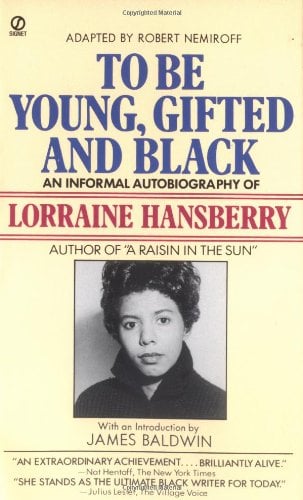
      To Be Young, Gifted, and Black

      As an alternative to watching Othello this weekend, there is another local production that I am also willing to give you extra credit for watching.

      To Be Young, Gifted, and Black by Lorraine Hansberry, the writer of A Raisin in the Sun, will be showing at Winter Haven Campus of Polk State College (16 miles from SEU: see driving directions) on the Main Stage Theater in the Fine Arts Building (see WFA on campus map).

      "Opening night, March 30, will include a pre-show reception at 6:30 p.m. with a 7:30 p.m. curtain time. The play continues March 31 through April 2 at 7:30 p.m. and closes with a Sunday matinee April 3, curtain 2:30 p.m." Tickets are $8.

      If you do go--which I would encourage--post a statement on your blog indicating that you watched the production in order to receive the extra credit.

      Also, see this production in the news.

      Watching Othello Is Now Optional

      I've decided to make watching Othello an optional activity instead of required. I am, however, offering extra credit. 

      The SEU production is at the Polk Theater on Friday, Saturday, and Sunday, April 1-3. Also note that on Thursday, there is a reduced rate production that you may attend.

      If you do go--which I would encourage--post a statement on your blog indicating that you watched the production in order to receive the extra credit. 

      See the university’s Arts and Events Calendar.

      Lake Bonny Park Field Trip

      Before class on Tuesday, April 5, you will need to visit Lake Bonny Park. The park is off Bartow Rd., directly across from Lakeland High School, about five minutes from Southeastern: see map.

      The purpose of this activity is to give you yet another opportunity to undertake the spiritual practice of paying attention, which is a practice of poets like Mary Oliver and of theologians like St. Augustine.

      The instructions are as follows:
      • Reread one of the nature poems of your choice of those we've discussed in class or of the ones that will be discussed the following class (one of the poems from Mary Oliver or Robert Hass).
      • Go preferably in the morning or evening when it is cool.
      • Find a quiet place to sit or stand in nature.
      • Be still, be quiet, pay attention, watch, and listen.
      • Go alone or go with someone else. If you go with someone, do not spend much time talking.
      • Stay at the park for a minimum of 45 minutes; stay still for at least fifteen minutes.
      • Don't read or write during the fifteen minutes of stillness.
      • Write a nature poem of your own at least 20 lines (or several shorter poems adding up to that much). 
      • In addition to meeting the prompt, include your poem in your post for the next class. Since writing these poems is part of this field trip, they do not count towards the 300 word minimum for the post.
      • Also, include in that post the following statement: "I went to Lake Bonny Park for this field trip, and I stayed there for at least 45 minutes." If you were there for less time, indicate the amount of time you were there for. 

      Sunday, March 27, 2011

      Circle B Bar Nature Reserve Field Trip, March 31

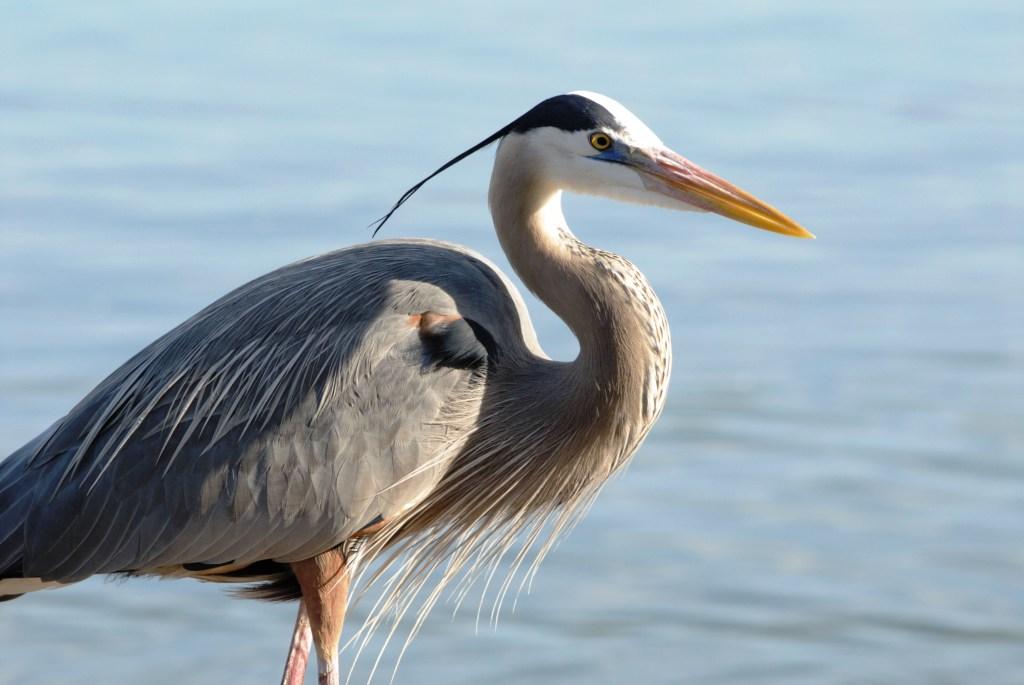
      Great Blue Heron photographed at Circle B
      from "Birdwatching from a Christian Perspective"
      Set on Lake Hancock here in Polk County, Circle B Bar is a stunningly beautiful nature reserve that features a Nature Discovery Center, hiking trails, and restored wetlands. It's a wonderful place to spend time outdoors and to see wildlife, especially birds. Like all wetlands, it also serves an important environemtnal function in our watershed. In conjunction with reading and writing some nature poetry, we will be visiting the reserve to take a tour, learn a little about the environment, spend some time in nature, and do some community service.

      We will visit on Thursday, March 31, from 9:20-11:30 AM. Since this is during chapel time, I've arranged for you to get chapel credit for your attendance.

      You will need to wear clothing appropriate for the setting. Suggested things to wear/bring: closed-toed shoes, shorts, t-shirt, hat, sun screen, bug repellent, water bottle, and some sort of snack like a granola bar. A camera and/or would be nice but are optional. However, do make sure to bring a notebook, something to write with, and copies of the texts for the day.

      You will have to arrange your own transportation. Carpooling is encouraged. Circle B is about 6.5 miles from Southeastern. (See map.) Please make sure to arrive on time.

      The community service will involve pulling non-native invasive species of grass from some plots of uplands that are undergoing restoration. I'm told that gloves will be provided. But prepare to get a little sweaty and dirty.

      Though we may have to be flexible, the planned itinerary is as follows:
      • Take a tram ride tour to the uplands
      • Spend some time sitting in nature and reading nature poetry
      • Community service project in uplands
      • Continue tour on tram
      • Return to Nature Discover Center to discuss visit

      Thursday, March 24, 2011

      Event This Friday - Extra Credit


      This Friday (tomorrow!) at 7:00 PM, Laura Runge--one of my PhD professors from USF--will be presenting writing and photography on the Hillsborough River in A115.
       
      Since this pertains to the nature poetry that we are going to be reading and discussing soon, I am inviting you to come. 
        
      I am offering extra credit: If you attend, I will give you 10 points added to your midterm or final exam grade. If you attend and write an additional blog post in response to the reading, I will give you 30 points added to your midterm or final exam grade.

      Wednesday, March 16, 2011

      AFI Field Trip, March 22

      Alliance for Independence (AFI) has worked with adults with mental disabilities in Lakeland for over 50 years. In conjunction with reading Tom Griffin's The Boys Next Door, we will be visiting their facility to take a tour, learn about their work, and do some community service.

      We will visit on Tuesday, March 22, from 9:15-11:15 AM. Since this is during chapel time, I've arranged for you to get chapel credit for your attendance.

      You will have to arrange your own transportation. Carpooling is encouraged. AFI is 1.5 miles from Southeastern. (See map.) Please make sure to arrive on time.

      The community service we will do will involve taking turns reading a story with the adults who AFI serves. When we do this, the plan is to break into three groups, each comprised of two of the small groups that we have in class. So when we break into these reading groups, stay with your small group from class.

      Friday, March 4, 2011

      Grades for Midterm

      Grades for the Midterm Exam have been posted in Blackboard. Select the "See Exam Grades" link on the side bar. Have a good spring break!

      Wednesday, February 23, 2011

      Midterm Exam Study Guide

      The midterm exam may cover anything that we've read or discussed so far in this semester. It may include True / False, Multiple Choice, Matching, Short Answer, and/or Essay Questions. I expect the exam to be fair and solid, aimed at finding out what you do know rather than getting you for what you don't know. If you have questions that this study guide does not cover, please ask them in the comment section below. That way, everyone will be able to see the answers.

      Literary Texts -- For these, you should be able to identify characteristic passages, matching them to author and text. You should also know some general things about the author’s biographies where headnotes are provided. You don't have to be able to recall minute details about texts. But you will have to be familiar with the texts and have a sense of the way they sound, feel, etc., so that if I give you a passage from, say, "This Blessed House" and a passage from "Sure Thing," you should be able to know which is which even if you don't specifically remember those exact passages.
      • "Frankie and Johnny"
      • Naomi Shihab Nye, "The Traveling Onion"
      • Babett's Feast
      • Margaret Atwood, "Happy Endings"
      • Raymond Carver, Headnote and "What Do We Talk about When We Talk about Love"
      • Jhumpa Lahiri, Headnote and "This Blessed House"
      • David St. John, "My Tea with Madame Descartes"
      • Robert Hass, Headnote and "A Story about the Body"
      • Carolyn Forche, Headnote and "The Colonel"
      • "Undo" and "The Ark" (videos)
      • The Book of Joel
      • C. S. Lewis, A Grief Observed
      • David Ives, "Sure Thing"
      • James Baldwin, Headnote and "Sonny's Blues"
      Texts, Concepts, and Practices for Reading Literature -- For these, you should make sure that you understand and be able to apply the concepts discussed. You should be able to explain the rationale for activities and field trips.
      • Corrigan, "Literature Is a Thing You Do as Part of Life"
      • Pearson, “Active Reading of Literature”
      • Pearson, “Why Read Literature”
      • Francis X. McAloon, "Reading for Transformation . . . "
      • Corrigan, “Darkness, Questions, Poetry, and Spiritual Hope”
      • Note on Sound
      • Notes on Character
      • Notes on Art, Meaning, Theme, and Interpretation
      • Notes on A Grief Observed
      • The “onion” poem experiment
      • Reading out loud outdoors
      • Painting in response to reading
      • Tuscana Ristorante field trip
      • Cemetery field trip
      • Sacred reading / lectio divina
      Example Questions

      1. Explain the following statement and explain what it has to do with reading literature: “Who a person is is more than what can be seen, more even than who that person lives as.”
      2. Who wrote the following passage, and what text does it appear in:
      You'll have to face it, the endings are the same however you slice it. Don't be deluded by any other endings, they're all fake, either deliberately fake, with malicious intent to deceive, or just motivated by excessive optimism if not by downright sentimentality.
      The only authentic ending is the one provided here:
      John and Mary die. John and Mary die. John and Mary die.

      1. According to Corrigan, doubt and uncertainty are often signs of weak faith.

        Circle one:           True       False
      2. Which of the following is true about sound in literature:
      a.       An abundance of soft, flowing words are necessary for a piece of literature to sound musical.
      b.      Though there are many, many types of literary devices associated with sound, rhyme is the most commonly used and the most important.
      c.       Repetition without variation is the basis of all sound and musicality in literature.
      d.      Assonance is the repetition of vowel sounds within words.
      e.      All of the above.
      1. In “Reading for Transformation” Francis McAloon suggests that people reading poetry ought to explore what?
      a.       The details of the text itself
      b.      The historical context in which it was written, including the personal life of the poet
      c.       The possible implications of the text for the reader
      d.      All of the above.
      e.      Something else not listed here.

      Friday, February 18, 2011

      Cemetery Field Trip

      Before class on Thursday, February 24, you will need to visit the oldest burial gardens in Lakeland, three connected cemeteries called Lakeview, Roselawn and Tiger Flowers. You will need to spend a minimum of a full 40 minutes inside the cemetery. These burial gardens are located less than ten minutes from Southeastern, at the corner of Ingraham Avenue and Parker Street (map). Parking is available across Ingram from the cemeteries, in the parking lot of the Polk County Government Center. I suggest that you enter the Tiger Flowers Cemetery entrance directly across from Everest University. You are responsible for arranging you own transportation, but I encourage you to carpool with other members of the class. 

      The purpose of this trip is to "inform" your reading of C. S. Lewis' A Grief Observed. In particular, it may "illustrate" Lewis' discussion of a man caring for his dead mother's grave site in Chapter 2 (page 21 in my book). More generally, it should give you a quite time to reflect on death and on the book as a whole.

      You will need to bring the text of A Grief Observed with you to the cemetery. You should arrive at the cemetery quietly and solemnly. This is a public place of grief. You need to show the utmost respect for the dead and for those still alive who have dead loved ones buried there. During your visit, I would like for you to spend most of your time walking around in silence, looking at the tombstones, and reading.  Please reread select pages and passages carefully and meditatively. This should be a "prayerful" event. It should also be an event that takes you deeper into the text and into life.

      To be counted as "present," for this field trip, you will need to include the following statement as part of your post for the following class: "I went to the Lakeview, Roselawn and Tiger Flowers cemetery complex for this fieldtrip, and I stayed there for at least 40 minutes." Optimally, you will also post a picture of yourself at the cemetery. You may also want to add some reflections about your visit and/or connections with A Grief Observed.

      If visiting this specific cemetery provides some hardship, you may arrange with me to visit a different one, providing that it is comparably old and large.

      If you think that visiting a cemetery at all will prove too emotionally difficult for you, you may arrange in advance with me for an alternative activity.

      Tuesday, February 15, 2011

      Hebrew Audio Bible

      Check out this link to hear Joel and all of the other books of the Hebrew Bible read aloud in Hebrew.

      Bring Your Painting Supplies to Class, February 17

      Make sure to bring your painting supplies to class on Thursday, February 17, as the course syllabus lists: "Brushes, paints, and a sketch pad suitable for painting, something other than watercolor. About $10." Participation on this day depends on you bringing these painting materials to class. We will be painting in response to The Book of Joel (download the version on the course calendar). Visual and visceral elements are central to apocalyptic literature. By painting in response to Joel, we will be able to appreciate and participate in these other dynamics of the text. Painting--if you emphasize the actual, physical process of painting and not just the end result--is a physical activity that happens in time that will allow us yet another way of experiencing the text. This means that it does not matter whether you can paint or not or even whether you consider yourself "artistic." I certainly do not have any painting abilities, but I have been able to get a lot out of this activity. The texts I've painted from are some of the ones I remember best and most meaningfully. The images in this post are samples of my painting in response to literature.

      Monday, January 31, 2011

      "Special Post" #1 (Character-Based Short Story), February 8

      The post due for class on February 8 will be our first special post-- a character-based short story. Instructions for writing this story are as follows:
      • By "character based,"  I mean that the "point" of the story should mostly be about revealing and developing a nuanced or multi-layered or complex character.
      • The story needs to be fiction, but the character can be loosely based on someone you know.
      • This story can be as long as you like. At a minimum, it should be at least 1000 words.
      • You can use as a model any of the stories we've read so far: "My Tea with Madame Descartes" by David St. John would serve particularly well.
      • It should make use of all of the aspects of "characterization" discussed in class: what the character looks like (or sounds like, smells like, etc.); what the character does; what the character says (or thinks, if you decide to give us a view of his or her thoughts); and what other characters say or think about him or her (if you have other characters).
      • It should have one or more characters, as many as you want, though in general one ought to be the main character.
      • Concerning plot, the story should have a beginning, middle, and end. It may have one or more scenes. 
      • The story should be written and revised through at least two drafts. I don't need to see the drafts, but the quality of the story ought to demonstrate that it is not a first draft.
      • The final draft of the story should be posted as the entry due before class on February 8, though you should begin working on it much sooner than then. In addition to posting your story, make sure to bring a printed copy of it to class.

      Wednesday, January 26, 2011

      Tuscana Ristorante Field Trip, January 27

      During class time on Thursday, January 27, we will be meeting at Tuscana Ristorante. Students must arrive to the dining hall by 10:40 AM. Students without meal plans will need to buy lunch. The element of "food" is an important part of making this "fieldtrip" work.
      The purpose of this fieldtrip is to highlight--and practice--the social aspect of literature. By social, I don't mean "socializing" as a "social butterfly" might do. I mean simply, normal human interactions between people. In "real life," when literature is discussed, it is most often discussed around dinner tables or at lunch time. Literature is about life and the doing and happening of literature takes place, in addition to in classrooms, in the arenas of real life.

      The guidelines are as follows:
      1. You need to sit with members of the class. You should sit with the small group you've been meeting with in class; however, if there are less than three members in your group, you may join with another group. No group, though, should have more than five or more than can fit around a small table.
      2. You should get some food and drink.
      3. Discuss the three readings for today. If you managed to bring a text of your own, contribute one or two points about it to the discussion. Talk about literature and the relationship between literature and life.
      4. You will have to stay "on topic" from after you get your food and make sure you know each other's names, until the end of the class period. However, you can decide what constitues being "on topic." You can decide what is relevant to discuss about literature and life. This will be hard work, especially if you are not used to having meaningful discussiong about literature. But since I am taking this risk of having this fieldtrip, please give it a long, solid try.
      5. Make sure to continually "return to the texts," weaving the actual words of the literature throughout the whole discussion. Make sure during the course of the discussion to read aloud short passages to each other.

      Thursday, January 20, 2011

      Film Night, Monday, January 24

      On Monday, Monday, January 24, we will be meeting for our film night at 7:00 PM in A121 to watch Babett's Feast.

      Babett's Feast won the Academy Award for Best Foreign Film in 1987. It is also listed as number three in The Arts & Faith Top 100 Films by Image, a journal of religion and the arts.

      We will watch the film as a piece of literature--which it is--and as a way of illustrating something about literature: that artistic literature is like fine food. 

      If you've prearranged with me to not attend this film night (for a legitimate reason), then you can make up the participation credit by watching the film on your own, getting notes from someone who watched it with the group, and then writing an extra blog post responding to the film and answering the following questions: How is artistic literature like fine food? And what does that mean for how it should be read?

      Sunday, January 9, 2011

      Welcome!

      Welcome to my blog and website for this course.

      Throughout the semester, I will post things here related to the course: announcements, descriptions of assignments, and supplementary material. I suggest that you “bookmark” it in your browser. Here are some links on how to bookmark a page: Internet ExplorerFirefoxGoogle Chrome. If you do that, it should only take you a few seconds to check the website.

      I look forward to the discussions we'll have over the course of this semester!

      Professor Corrigan

      How to Set Up Your Blog

      You will need to have your blog set up and running by the end of the first week of class. In general, excuses for technological difficulties will be allowed through the second week of class. We will use Google’s blogger.com as the blogging technology for this class. As a Web 2.0 application, Blogger.com is designed to be especially easy to use even if you do not have much experience with internet technology. More or less, the process is self-explanatory. However, there are a few specific things that you need to make sure that you do while setting up your blog for the purposes of this class. Select "read more" for further instructions.

      Leave Your Blog URL Here

      Once you've set up your own blog, leave a comment on this post with your name and the URL to your blog. This is so that I will be able to have access to your blogs and also so that I can build a list of links so that everyone in the class will be able to access each other's blogs.

      Note: It leaves your name automatically when you leave a comment, but I'm asking for your name just in case you didn't use your actual name as your display name. If that's you, go to your settings and change your display name so I'll know who you are.

      Professor Corrigan Bio

      Here is a brief academic bio about myself along with a picture of my family.

      I teach writing, literature, and humanities at Southeastern University. My wife Christine and I have two young daughters, Elea and Sara. We live in Lakeland.

      I have an MA degree in Literature from North Carolina State University, and I am working on a PhD in the same thing at the University of South Florida. I have also done graduate studies at Duke University and the University of North Carolina at Chapel Hill. My scholarly research focuses on Christian spirituality, literature, and pedagogy.

      I have presented scholarly papers at the Conference on Christianity and Literature, the College Theology Society, the North Carolina Symposium on Teaching Writing, and the American Academy of Religion in Montreal, among others. I have written peer-reviewed articles published in the journal Literature and Belief, Encounter: Education for Meaning and Social Justice, and in God, Grace, and Creation: The Annual Volume of the College Theology Society and have written short articles on teaching published or forthcoming in The Teaching Professor and Pedagogy.

      Left to right:  Mrs. Corrigan, Elea, me, Sara